Assessing the root cause of a blade defect


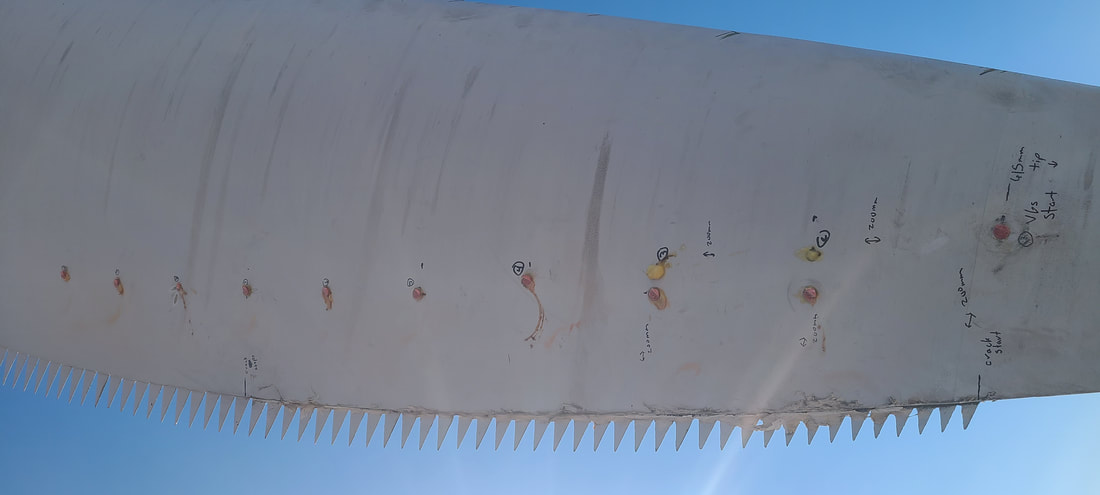
A 2.0 MW V90 turbine, commissioned in 2008, experienced a shell debond from the boxbar, leading to concerns about the integrity of the blade and the potential for similar issues across other assets.
A 2.0 MW V90 turbine, commissioned in 2008, experienced a shell debond from the boxbar, leading to concerns about the integrity of the blade and the potential for similar issues across other assets.
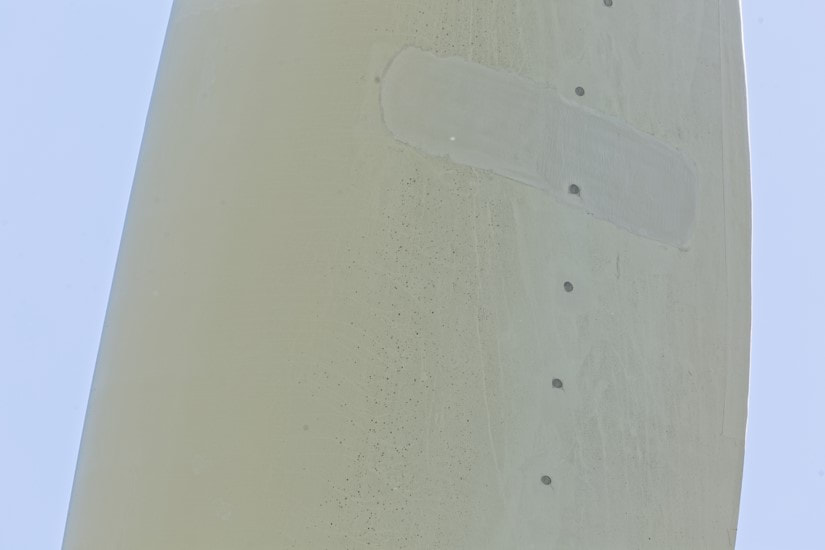
A 1.7 MW wind turbine with 50.2 m blades suffered damage when approximately 0.5 m of the pressure side shell at the tip was torn away by a lightning strike. The trailing edge was also separating as the blade rotated, putting the turbine at risk of downtime.
Challenge
A 5 MW wind turbine with 59.5 m blades, commissioned in 2013, was being curtailed due to blade overload. An open trailing edge in the mid-span region increased structural risk and limited safe operation, reducing turbine availability.
Solution
Our team completed a root cause analysis and applied D-TE™ to 90 blades to eliminate the open trailing edge and restore blade integrity. The solution was designed to remove the overload risk and enable normal turbine operation without requiring structural repair.
Impact
The intervention increased turbine availability and eliminated the risk of further asset damage. The certification body confirmed that the D-TE™ solution did not affect the blade’s load-carrying capability, providing assurance of long-term operational safety.
A 1.5 MW wind turbine with 37 m blades, commissioned in 2007, had developed multiple transverse cracks in the maximum chord region.
A 0.9 MW wind turbine with 27 m blades, commissioned in 2012, was being curtailed due to blade overload in strong winds. The turbine risked reduced energy production and operational inefficiency.
A 1.5 MW wind turbine with 34 m blades, commissioned in 2003, was experiencing open trailing edges. The operator sought stronger blades with higher resistance tolerances and aimed to extend the operational life of existing blades by an additional 10 years.
A 2.0 MW wind turbine, commissioned in 2014 with 47.5 m blades, was experiencing a transverse crack in the midspan section along with an open trailing edge. The issue risked significant production losses and recurring repair costs.