Silent Blade Risk: What’s already hitting your balance sheet

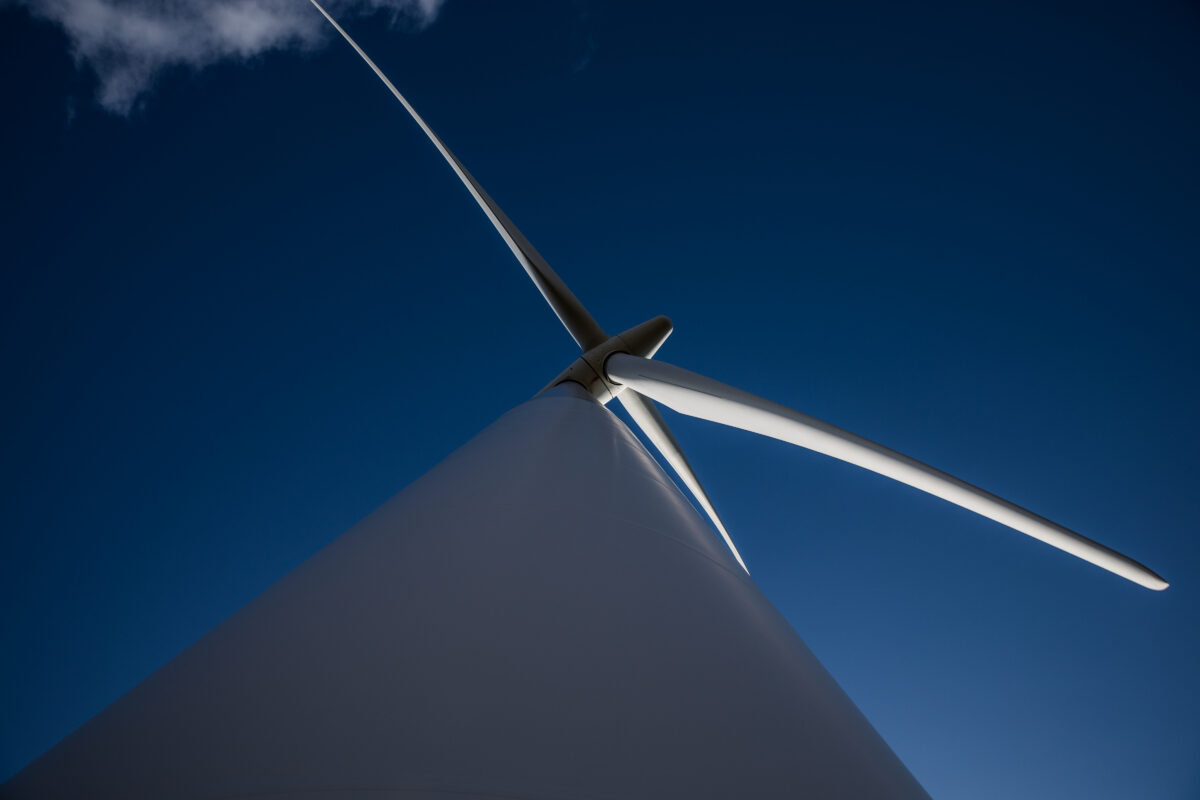
With wind turbines growing larger and offshore capacity expanding fast into sites that are harder to reach and more expensive to insure, Mathias Reding, Managing Director of Bladena, a RES company, explains why blade failure, one of the most common and least understood causes of wind turbine insurance claims, points to a data gap the industry can no longer afford.
Onshore fleets are heading in the same direction: bigger rotors, longer service lives and less patience for unexplained downtime. At Bladena, we see this gap play out repeatedly: a defect that could have been identified, with the cost recovered from the manufacturer, instead becomes a slow, contested insurance case months or years later.
For a marine market increasingly underwriting offshore wind alongside its traditional hull, cargo and liability book, that data gap sits on unfamiliar ground: the same asset now carries loss patterns the wider marine book wasn’t built to price.
The moment the risk changes hands
The clearest example is what happens at the end of a turbine’s warranty period. Overnight, responsibility for undetected blade defects moves from the manufacturer to the owner. The warranty period is, in effect, a window to identify and remedy manufacturing-related issues while the OEM is still contractually responsible; once it closes, the same issue becomes the owner’s problem and often ends up on the insurance book instead.
In our experience, this window is still treated as a formality rather than a commercial opportunity. Inspections in the run-up to warranty expiry are frequently no more thorough than routine annual checks, when they should be looking specifically for the kind of latent defect that only shows up years later.
Catching a defect while the OEM is responsible is materially cheaper than arguing, after the event, that a later failure was caused by something that predates the policy, a case that only gets harder to make once an asset gets older, sits further offshore and out of easy reach.
Anatomy of a blade claim
When a blade claim does reach an insurer, it rarely stands alone. The clearest illustration comes from AXIS Capital’s recent review of its offshore wind claims portfolio, which found that turbines account for 57% of all claims by count and 37% of incurred losses, with blade damage making up 16% of claim count at an average cost of around $1.5 million. The pattern of turbines, and blades specifically, as a leading loss driver is consistent with what we see across the wider fleet, onshore included.
Underneath the physical repair sits business interruption, frequently the larger part of a blade claim. Establishing why a blade failed, and whether that cause was a sudden external event or a slower, pre-existing issue, is where most disputes between owners, insurers and maintenance contractors play out. Insurers respond to a sudden, external triggering event, not to the material tolerances and manufacturing variability inherent in any complex composite structure; the practical effect is that a borderline defect only becomes insurable once something external, most often a lightning strike, turns it into damage, and untangling that sequence is rarely straightforward.
The lightning protection blind spot
The least understood part of blade risk is the lightning protection system itself. Even a system designed to current international standards is not expected to intercept every strike: in Bladena’s engineering assessments, a well-specified lightning protection system can still allow damage in a small proportion of events, commonly cited at around 2%. Owners who have paid for a top-tier system rarely expect that, and the gap between the standard and the expectation is where a lot of confusion, and cost, sits.
Two further developments compound this. The first is that changes in blade materials and construction mean lightning damage can be unpredictable. The second is a monitoring gap. Most standard lightning monitoring setups only record whether a strike occurred and its peak current, in kiloamps. They do not capture voltage, which is often the more useful indicator of whether the system actually functioned as designed. Two turbines can register an identical, modest current reading and end up with entirely different outcomes: one undamaged, one with a shattered blade, and the standard record cannot tell you why.
None of this is a reason to distrust lightning protection technology. It is a reason to invest in better instrumentation once an asset is large enough to justify it, onshore or offshore.
Better data, not fewer disputes
The industry does not need fewer disputed blade claims. It needs better shared data before those
disputes happen: more rigorous end-of-warranty inspection, monitoring that captures voltage as well as current, and a shift in mindset from treating blade risk as an unavoidable cost to something that can be actively managed down. That case only strengthens as offshore capacity keeps expanding, where access is harder, weather windows are shorter, and every extra day of downtime is worth more.
Two questions matter most at renewal: whether end-of-warranty inspection records exist, rather than the annual maintenance log alone, and whether lightning monitoring on site captures voltage as well as peak current. Together, they address most of the risk described in this article.
RES has been part of this conversation for over a decade, including contributing technical insight to one of the first industry-wide studies of blade failure, GCube’s 2014 “Breaking Blades” report. Within that history, Bladena now offers the specialist engineering view insurers and owners need as the asset base scales up, onshore and offshore alike.
If this is relevant to a portfolio you are reviewing, we would welcome the conversation.
First published in the October 2026 edition, Issue 25, of The Marine Insurer titled ‘Global Conflict Dictating Maritime Trade’.
About:
Mathias K. Reding, Managing Director, Bladena
Mathias leads global engineering strategy for wind turbine blade solutions at Bladena, a RES company, combining structural expertise with real-world operational insight. He works closely with insurers and asset owners to deliver independent root cause analysis and technical guidance across complex claims and performance challenges.
With over 15 years of engineering experience – including nine years specialising in wind turbines – his expertise spans RCA, structural blade solutions, asset management, R&D, and both laboratory and field testing.
Mathias has extensive experience in diagnosing blade failures and supporting data-driven decisions on repair, replacement and long-term asset strategy, providing insurers with the clarity needed to make confident, defensible decisions.