Disputed Blade Failure Claim -Independent RCA for Claims and Liability Assessment 

Following a blade break incident, a disputed insurance claim arose with multiple stakeholders presenting differing interpretations of the technical causation leaving the insurer without a reliable basis to assess liability or progress the claim. The insurer required an independent technical assessment to clarify the failure mechanism, determine whether the event was isolated or indicative of a wider fleet risk, and establish a defensible position for claim resolution.

Assessing the root cause of a blade defect

A 2.0 MW V90 turbine, commissioned in 2008, experienced a shell debond from the boxbar, leading to concerns about the integrity of the blade and the potential for similar issues across other assets.

D-TE™ – enabling operation through adverse conditions

A 1.7 MW wind turbine with 50.2 m blades suffered damage when approximately 0.5 m of the pressure side shell at the tip was torn away by a lightning strike. The trailing edge was also separating as the blade rotated, putting the turbine at risk of downtime.

D-TE™ – restoring blade integrity for higher availability

Challenge

A 5 MW wind turbine with 59.5 m blades, commissioned in 2013, was being curtailed due to blade overload. An open trailing edge in the mid-span region increased structural risk and limited safe operation, reducing turbine availability.

Solution

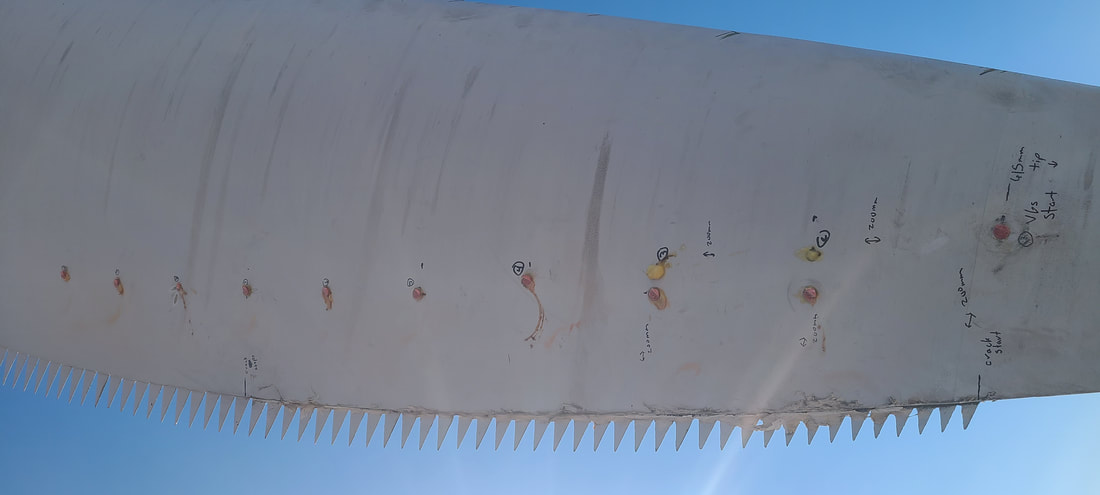
Our team completed a root cause analysis and applied D-TE™ to 90 blades to eliminate the open trailing edge and restore blade integrity. The solution was designed to remove the overload risk and enable normal turbine operation without requiring structural repair.

Impact

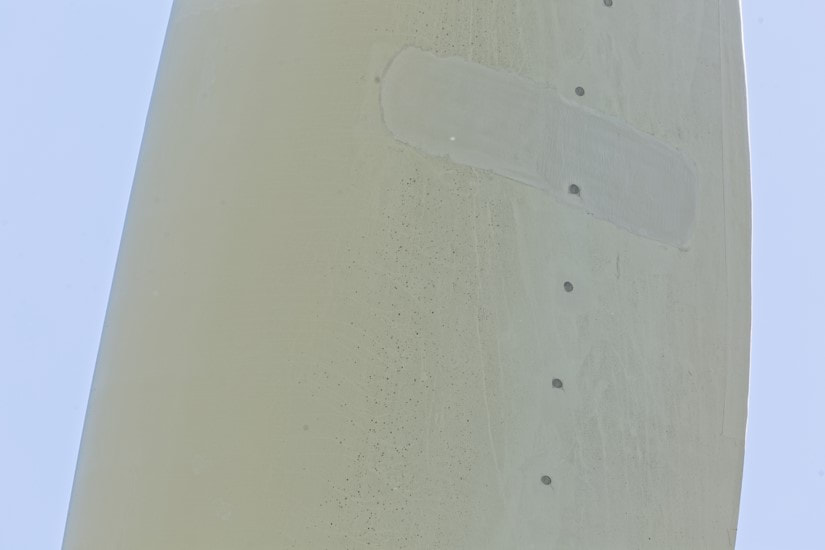
The intervention increased turbine availability and eliminated the risk of further asset damage. The certification body confirmed that the D-TE™ solution did not affect the blade’s load-carrying capability, providing assurance of long-term operational safety.