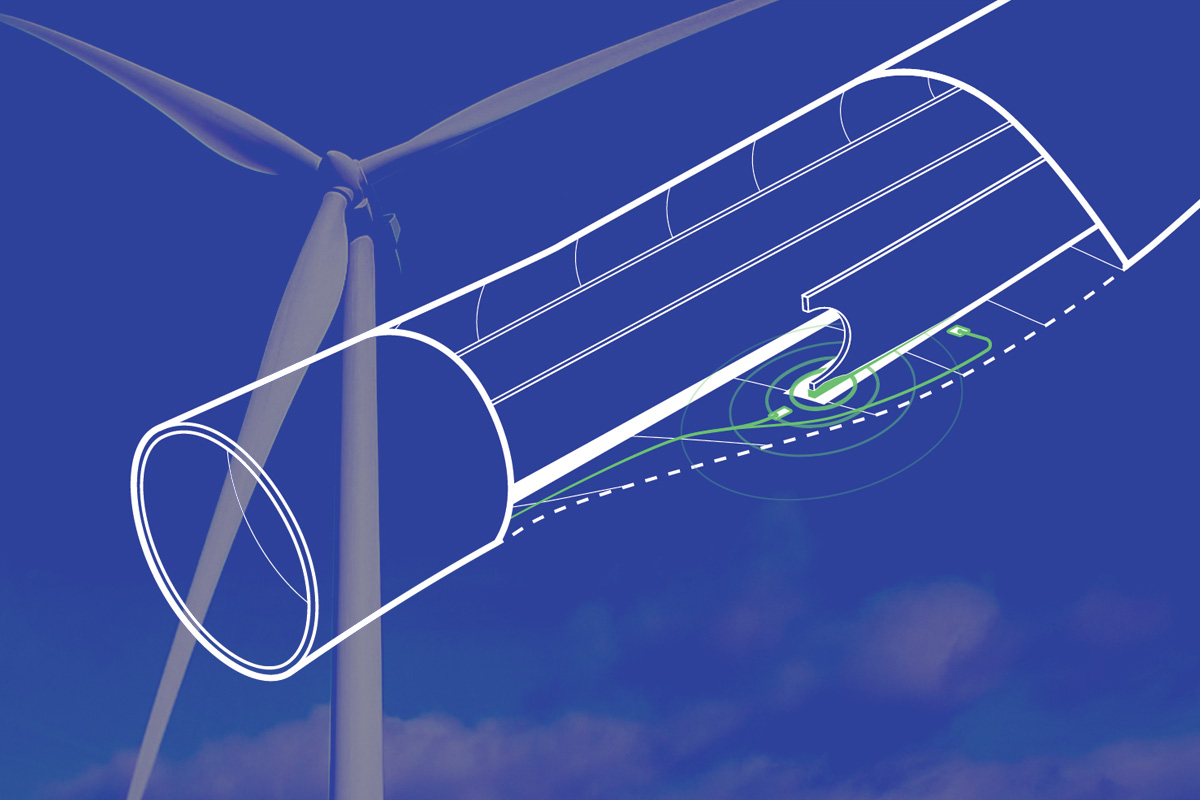
D-String® enabling long-term performance with minimal repairs

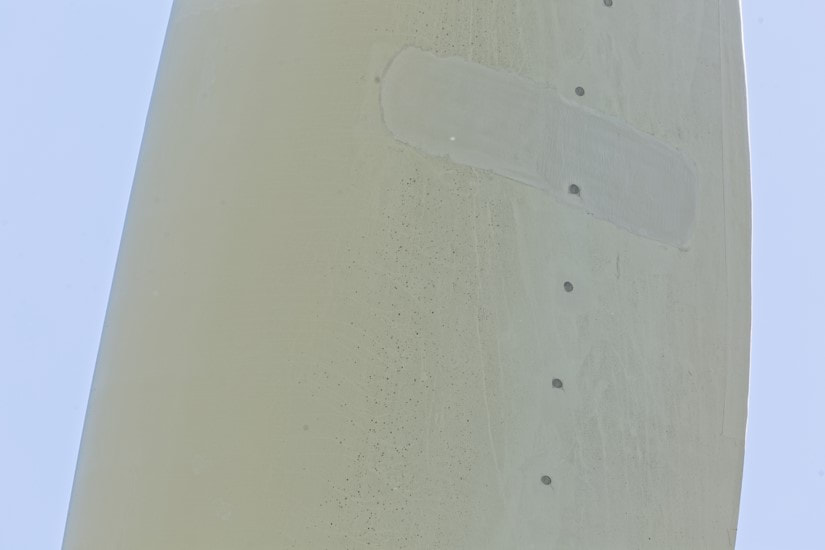
A 1.5 MW wind turbine with 37 m blades, commissioned in 2007, had developed multiple transverse cracks in the maximum chord region.
A 1.5 MW wind turbine with 37 m blades, commissioned in 2007, had developed multiple transverse cracks in the maximum chord region.
A 0.9 MW wind turbine with 27 m blades, commissioned in 2012, was being curtailed due to blade overload in strong winds. The turbine risked reduced energy production and operational inefficiency.
A 1.5 MW wind turbine with 34 m blades, commissioned in 2003, was experiencing open trailing edges. The operator sought stronger blades with higher resistance tolerances and aimed to extend the operational life of existing blades by an additional 10 years.
A 2.0 MW wind turbine, commissioned in 2014 with 47.5 m blades, was experiencing a transverse crack in the midspan section along with an open trailing edge. The issue risked significant production losses and recurring repair costs.
London, 29 November 2024 – RES, the world’s largest independent renewables company, has acquired Danish wind turbine blade engineering specialist, Bladena, further strengthening its suite of advanced digital solutions.
Established in Denmark in 2011, Bladena provides engineering expertise to minimise the risk of blade failures for wind farm owners through the entire lifetime of a wind turbine blade. These include proprietary technologies including D-String®, D-TE™, X-Stiffener™, and The RTZ Solution™ that can identify, assess and address blade issues and extend asset lifetimes.
Turbine blades account for approximately 27% of unplanned wind energy O&M costs, and with modern blades exceeding 60 metres in length and their numbers expected to triple over the next decade, addressing early lifecycle challenges is critical to extend turbine asset lifecycles and improve operational reliability.
The acquisition follows closely behind RES’ recent integration with Swiss drone inspection company, Sulzer Schmid, and further strengthens its digital solutions and services businesses.
Eduardo Medina, CEO RES, said: “As we continue to grow, we remain committed to bringing in technologies that provide value to our customers around the world. Acquiring Bladena is a significant step forward for RES as we scale and equip our business to meet growing market demand for digital services and blade maintenance. I look forward to welcoming our new colleagues as we continue our mission to deliver affordable zero carbon energy to communities around the world.”
Arun Narayanan, Digital Solutions CEO, RES added: “Through Bladena we will add industry leading blade technology and engineering expertise to our existing range of solutions such as AnemoLive, AeroUp and TuneUp, which have been shown to drive increased annual energy production. Our customers will now be able to better manage blades and improve turbine reliability, helping reduce costs, enhance revenue, and maximise the value of their investments.”
RES currently supports 41GW of operational assets globally, and over its 40+ year history has developed and/or constructed over 26GW of renewable assets – enough to power 25 million homes for a year. Through the recent acquisitions of Ingeteam and Sulzer Schmid, RES has an enhanced digital solutions and services offering that will serve current and future customers. The company has a development pipeline of 22GW across a range of renewable technologies, due to come to market within the next five years.
ENDS
About RES
RES is the world’s largest independent renewable energy company, working across 24 countries and active in wind, solar, energy storage, green hydrogen, transmission, and distribution. An industry innovator for over 40 years, RES has delivered more than 26 GW of renewable energy projects across the globe and plans to bring more than 22 GW of new capacity online in the next five years.
As a service provider, RES has the skills and experience in asset management, operations and maintenance (O&M), and spare parts – supporting 41GW of renewable assets across 1,300 sites. RES brings to the market a range of purposeful, practical technology-based products and digital solutions designed to maximize investment and deployment of renewable energy.
RES is the power behind a clean energy future where everyone has access to affordable zero carbon energy bringing together global experience, passion, and the innovation of its 4,500 people to transform the way energy is generated, stored and supplied. Visit: www.res-group.com
Media contacts
RES
Rachel Anderson
[email protected]
Rory Brown
As part of the CORTIR III project supported by the EUDP (Energy Technology Development and Demonstration Program), we have performed a field measurement campaign on the 7MW ORE Catapult Levenmouth Demonstration Turbine in Scotland, featuring 83.5-meter blades.
Understanding the hidden risks in wind Turbine Blades
At first glance, a crack in a wind turbine blade might seem like an isolated incident—a single point of failure. But in reality, it’s often just the final symptom of a much deeper issue. Structural fatigue and weaknesses due to design decisions can silently accumulate over time, gradually pushing a blade closer to its breaking point.
That’s why we believe there is value in going beyond surface-level inspections to understand what’s really happening inside a blade—and how that insight can help prevent costly failures in the future.
Why blade failures can occur
Blades are subjected to immense forces throughout their operational life. Each gust of wind, each change in temperature, each start-up and shutdown cycle contributes to structural wear and tear. While modern blades are built to endure these stresses, even small compromises—whether in design, materials, or manufacturing—can add up.
Over time, this can lead to what’s known as cumulative fatigue: damage that builds gradually until it reaches a critical point. By the time a crack appears, the underlying issues may have been developing unnoticed for years.
Why design decisions matter
Many of the risks associated with blade failure can be traced back to the design phase. Blades are designed to meet industry standards, but real-world conditions can vary considerably, meaning they may not be fully accounted for during the design. Decisions may have been made in order to reduce weight or lower material costs, leaving certain areas under-reinforced when considering the variable real-world scenarios. These weak points might not be visible externally, but they can become the origin of structural degradation over time—especially in blades exposed to high turbulence or complex loading conditions.
Understanding these vulnerabilities is essential not only for preventing failure but for optimising performance across the entire fleet.
Why visual inspections aren’t enough
Routine inspections play an important role in blade maintenance and combining both internal and external inspections increases the opportunity to identify damage and catch issues before they develop further. But, they have their limits. Visual inspections often only detect damage once it’s well advanced. Cracks, delaminations, or fibre failures may already be compromising the blade’s integrity by the time they’re spotted.
This is where data-driven structural insight becomes invaluable. Using advanced modelling and simulation, we can detect early indicators of stress and fatigue, assess the specific risk factors present in each blade design, and identify where intervention could make the biggest difference.
Data-driven decisions with Bladena
At Bladena, we offer a unique combination of engineering expertise, tools, and services to help you take control of blade risk before it leads to failure. Our methodologies are grounded in physics-based modelling and decades of industry knowledge. We help you:
By understanding the “why” behind failures—not just the “what”—we give asset owners, OEM´s and operators a clearer path forward.
Looking ahead: proactive risk management
The cost of a single blade failure can be significant—not just in terms of repair or replacement, but also downtime, lost production, and long-term fleet reliability. That’s why a proactive approach, grounded in structural insight, is essential.
If you’re ready to understand where your risks lie – and what you can do about them – our experts are here to help.